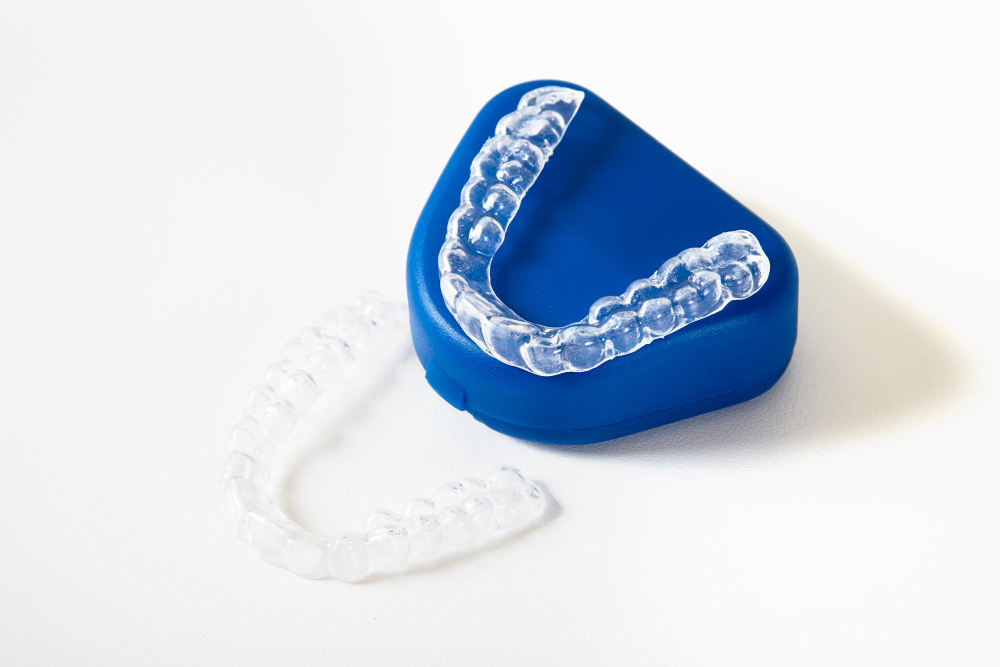
An honest look at when a night guard is genuinely necessary, why store-bought guards can make things worse, and what nighttime grinding is often a sign of.
What a night guard actually does
A night guard does not stop you from grinding. That is the first thing worth clearing up, because most patients assume that is the point.
Grinding and clenching start in your brain during sleep, not in your jaw. A guard cannot switch off the signal. What it does is put a layer of acrylic between your upper and lower teeth so the force lands on replaceable material instead of enamel. It also changes how your jaw muscles fire when your teeth cannot fully interlock, which is why many patients report less morning tightness even though the grinding itself continues.
So a night guard is protective, not curative. That distinction matters, because it tells you when one is worth wearing and when you are treating a symptom while ignoring the cause.
The signs that actually mean yes
Plenty of people grind occasionally and never need anything. I recommend a guard when I can see the force adding up. Signs that point that way:
- Flattened edges on your front teeth, or teeth that look shorter than they used to
- Small chips along the biting edges, especially on canines
- Cracks running through enamel that catch the light
- Notching at the gumline where enamel meets root
- Sore jaw muscles, temple headaches, or a tight face on waking
- Teeth that ache or feel loose first thing in the morning and settle by midday
- A partner who hears the grinding
- Existing crowns, veneers, or bonding that need protecting
That last one carries more weight than patients expect. If you have invested in restorative or cosmetic work, a guard is the cheapest insurance available for it. Porcelain does not wear the way enamel does, and an unguarded grinder can fracture a crown or chip bonding within a couple of years.
The reverse is also true. If your teeth show no wear, your jaw feels fine, and nobody has ever mentioned noise at night, you probably do not need a guard just because you suspect you clench under stress. Occasional clenching is common and not inherently damaging.
Why drugstore guards cause problems
This is where I see the most avoidable harm.
Boil and bite guards from the pharmacy are made of soft thermoplastic. Soft material feels comfortable, but it invites chewing. Many patients unconsciously bite into a soft guard all night, which increases muscle activity instead of reducing it. Some wake up more sore than they did without one.
The fit is the bigger issue. A guard molded at your kitchen sink does not sit precisely on every tooth. It contacts some teeth and not others, and hours of nightly pressure on a handful of contact points can slowly move those teeth. I have seen bites change measurably after a year of sleeping in a poorly fitted guard, and correcting that costs far more than a properly made one would have.
Soft guards also break down quickly, and the material holds bacteria and odor once it starts to degrade. A custom guard made from harder acrylic distributes force across every tooth, holds its shape, and lasts years rather than months.
What a night guard will not fix
Three things worth knowing before you assume a guard solves the problem.
It does not treat the cause. Nighttime grinding is frequently tied to stress, certain medications, alcohol, caffeine, or disrupted sleep. A guard protects your teeth while you sort that out. It does nothing about the underlying trigger.
It does not fix a jaw joint problem. Guards can reduce muscle strain, and many patients with jaw pain feel better wearing one. But if your joint clicks, locks, or hurts when you open, that needs an actual evaluation rather than an appliance alone. Our TMJ and functional treatments cover the fuller picture, including therapeutic Botox when muscle overactivity is the main driver.
It does not correct a bite. If teeth are missing, crowded, or meeting unevenly, your muscles work harder to find a comfortable position. A guard covers that up. Orthodontic or restorative correction addresses it.
The one thing people miss
Grinding and disrupted breathing during sleep often show up together. When the airway narrows, the body responds with muscle activity that includes jaw movement, and grinding can be part of that pattern.
This matters because if breathing is the real problem, a night guard treats the wrong thing entirely. You protect your enamel and leave the airway issue running. Worse, some guards that push the lower jaw backward can make an already narrow airway more crowded.
So when someone comes in with heavy wear, I ask about sleep. Do you snore. Do you wake gasping or with a dry mouth. Are you exhausted no matter how long you were in bed. Does anyone say you stop breathing. If the answers point that direction, the conversation shifts, and we talk about sleep apnea treatment rather than a protective guard alone.
Not everyone who grinds has an airway problem. But nobody should get a guard without being asked.
Who needs something other than a standard guard
A few situations call for a different appliance or a different order of operations.
If you grind hard and already have significant wear, a thin soft guard will not hold up. Those cases need a harder, properly designed appliance.
If you have untreated decay, a failing filling, or active gum disease, that gets handled first. An appliance fits over whatever is there, including problems.
If you are mid-treatment with aligners, your retainers and your guard need to be coordinated rather than competing.
And if daytime clenching is your main pattern, a night guard does little for it. That calls for habit awareness strategies and sometimes muscle treatment instead.
What this means practically
A night guard is genuinely useful for the right patient, and useless or harmful for the wrong one. The deciding factor is not whether you think you grind. It is whether there is visible wear, real symptoms, or restorative work worth protecting, and whether anything else is driving the grinding in the first place.
At Core Smiles, that evaluation takes one appointment. We look at wear patterns tooth by tooth, check how your bite comes together, examine your jaw joints and muscles, and ask about your sleep. Then you get a straight answer about whether you need a guard, what kind, or whether the more useful next step is something else entirely.
Waking up with a sore jaw or worn teeth? Schedule an evaluation at Core Smiles.