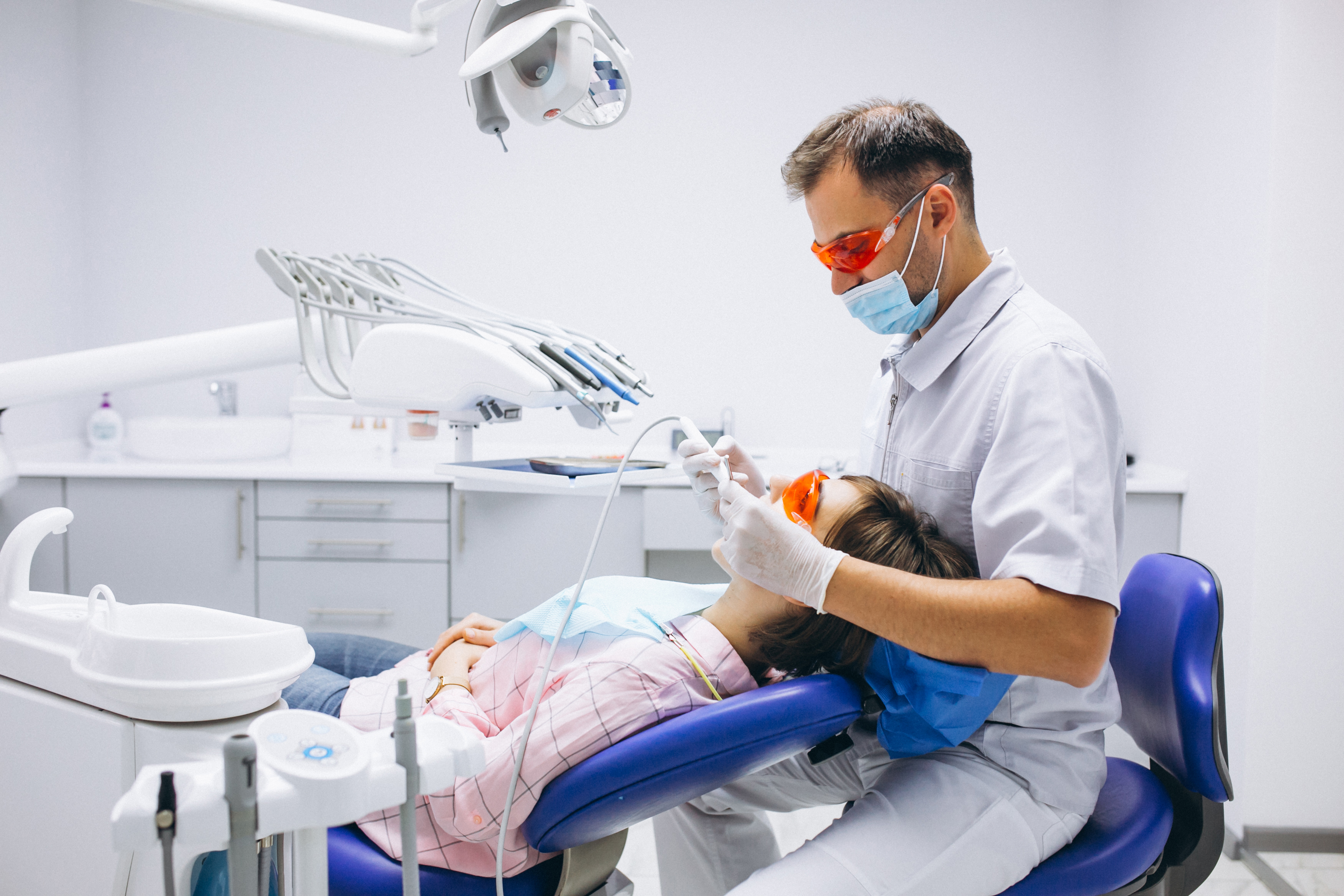
What a root canal actually removes
A root canal treats the inside of the tooth. The pulp, which is the nerve and blood supply sitting in the hollow center, has either become infected or inflamed past the point of healing. That tissue is removed, the canals are cleaned and shaped, and the space is sealed with a filling material and sealer so bacteria cannot recolonize it.
What is not removed is the tooth. The enamel and dentin walls, the roots, and the ligament that anchors the tooth to bone all stay exactly where they were. The tooth stays alive in the sense that matters day to day: it is still held in bone by living tissue, and it still functions.
The old explanation for weakness was that removing the blood supply dries the tooth out and makes the dentin brittle. That idea has not held up well. Dentin does not lose meaningful moisture or toughness after treatment. So no, taking the nerve out does not weaken the tooth.
Something else does.
Why treated teeth fracture
The honest answer is that root canal teeth do break more often than untreated teeth. The reason is structural, not biological.
Think about why the tooth needed the root canal in the first place. Usually there was a deep cavity, a large old filling, a crack, or a combination. All of that means tooth structure was already gone before treatment started. Then the root canal requires an access opening through the top of the tooth to reach the canals, which removes more.
Back teeth do their work by having cusps braced against each other around a solid rim. Hollow out the middle and thin the walls, and those cusps start to flex apart every time you bite. Flex a wall enough times and it cracks, sometimes below the gumline, which is the one kind of fracture that usually cannot be saved.
So the risk is real. It is just a question of how much tooth is left, not whether the nerve is gone.
The crown is not an upsell
This is where I want to be direct, because patients often finish the root canal, feel fine, and decide the crown can wait or is unnecessary.
On molars and premolars, the restoration is what determines whether the tooth survives. A crown covers the cusps and holds them together so they cannot flex apart. Root canal treated back teeth restored with cuspal coverage have a substantially better long-term survival record than those left with only a filling. That gap is one of the more consistent findings in restorative dentistry.
Front teeth are a different case. An incisor has one root, takes shearing forces rather than crushing ones, and often needs only a small access opening. If most of the tooth is intact, a well-bonded composite filling can be enough, and we would rather keep your natural tooth structure than remove more of it for a crown you do not need.
The choice depends on which tooth it is and how much of it is left. At Core Smiles that decision gets made with CEREC same-day crowns available in the same visit, which matters for the next point.
The timing problem nobody mentions
Here is the failure I see most, and it has nothing to do with the root canal itself.
The tooth gets treated. A temporary filling goes in. Then months pass. Life gets busy, the tooth stops hurting, and the permanent restoration never happens.
Temporary fillings are designed to last weeks, not seasons. They wear, they leak, and bacteria work their way back into canals that were sterile when they were sealed. Meanwhile the tooth is sitting there unprotected, taking full chewing load with thin walls. A tooth that could have lasted decades gets lost to a fracture or a reinfection that was entirely preventable.
If you have had a root canal and you are still walking around on a temporary, that is the thing to handle. Not next year. Now.
What about the claim that root canals cause illness?
You will find this online, so it is worth addressing plainly. The idea traces back to research from the early 1900s proposing that treated teeth seed disease throughout the body. That work has been examined repeatedly since, it does not hold up to modern methods, and major dental and medical bodies do not support it.
The practical comparison also gets left out of those posts. The alternative to a root canal is extraction. Pulling a tooth means either living with a gap, which lets neighboring teeth drift and the bone in that site change over time, or replacing it with a bridge or an implant. Those are good options when a tooth truly cannot be saved. They are not an upgrade over a tooth that can be.
The other myth worth retiring: that the procedure is agonizing. The pain people associate with root canals is the infection, which is often severe. The treatment is what relieves it, and it is done under local anesthesia.
The tooth will not warn you anymore
One real consequence of removing the nerve: the tooth loses its alarm system.
You will still feel pressure and know the tooth is there, because the ligament around the root is intact and does that job. What you will not feel is a new cavity forming at the edge of the crown or filling. On a normal tooth, decay eventually causes sensitivity and you come in. On a treated tooth, it can progress quietly until it reaches the seal.
That is not a reason to avoid treatment. It is a reason to keep up with routine visits and x-rays, which is how recurrent decay around a restored tooth gets caught while it is still small.
When a root canal is not the right answer
Sometimes it is not, and you deserve to hear that before treatment rather than after.
A tooth with a vertical fracture running down the root cannot be sealed, no matter how well the canals are cleaned. A tooth with so little structure left that there is nothing to hold a crown will not hold a crown. Severe bone loss from advanced gum disease changes the math as well.
In those situations, saving the tooth means spending money on something with a poor outlook, and planning a replacement from the start is the better call. That assessment takes an exam, an x-ray, and an honest conversation.
What this means practically
A root canal does not weaken your tooth by removing the nerve. What weakens the tooth is the structure that was already lost to decay or cracking, plus the access needed to treat it. Restore it properly and promptly, and a treated tooth can serve you for decades. Leave it on a temporary filling, and it may not last the year.
If you are dealing with a tooth that aches, throbs with heat or cold, or has a lump on the gum near it, get it looked at rather than waiting to see whether it settles. Our team in NoMad handles urgent dental problems the same day when we can, and the earlier a tooth is assessed, the more of it there usually is to save.
Have a tooth that needs attention? Schedule a consultation at Core Smiles.