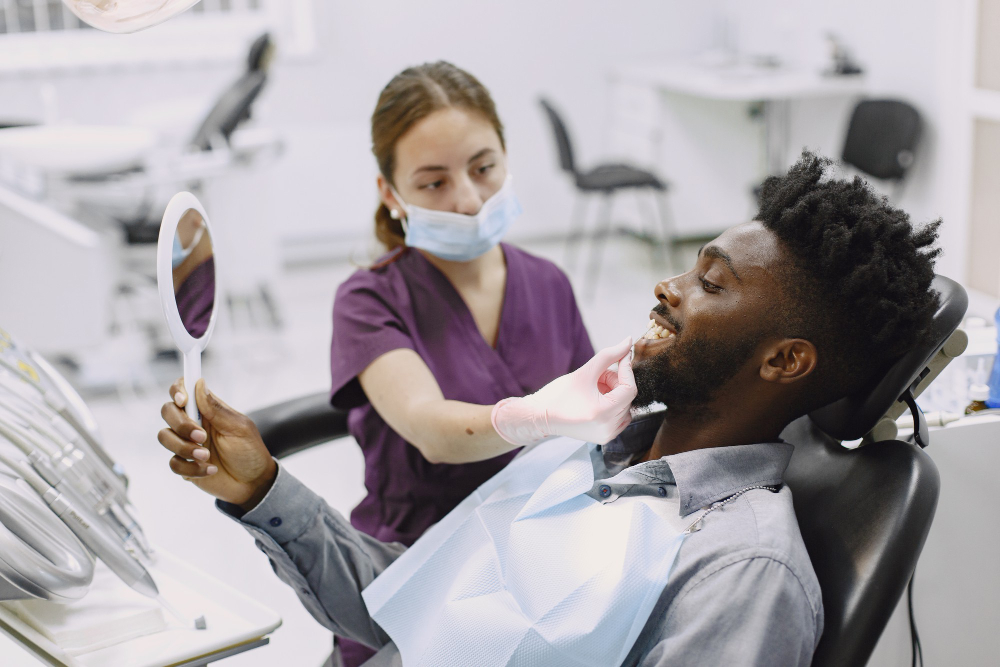
An honest look at what peroxide whitening does to enamel, why sensitivity happens, and which whitening products actually cause damage.
What whitening actually does to a tooth
Whitening gels work with one of two active ingredients: hydrogen peroxide, or carbamide peroxide, which breaks down into hydrogen peroxide and urea once it hits your mouth. Carbamide is roughly a third the strength of hydrogen peroxide at the same percentage, which is why a 10% carbamide gel and a 3.5% hydrogen peroxide gel land in similar territory.
The peroxide diffuses through your enamel and into the dentin underneath, which is where most tooth color actually lives. Once there, it oxidizes the pigmented molecules that have accumulated over years of coffee, tea, red wine, and tobacco, breaking apart the chemical bonds that make those molecules reflect color. The pigment is not scrubbed off or bleached away at the surface. It is chemically dismantled from the inside.
Nothing in that process removes mineral from your enamel. Laboratory studies do show short-term changes to enamel surface hardness and texture after peroxide exposure, and this is where a lot of the alarm online originates. What those studies usually leave out is that saliva remineralizes the surface within hours to days. In a real mouth, with real saliva, supervised whitening at accepted concentrations has a well-documented track record over decades of use.
Sensitivity is the real side effect
This is the part patients should actually plan for, and it is the complaint I hear most.
Peroxide does not stop at the dentin. It continues down the microscopic tubules that run through dentin toward the pulp, where it provokes a temporary inflammatory response. The result is that sharp, cold-air, zinging sensitivity that shows up during treatment or a few hours after. Depending on the concentration used and the study you read, somewhere between a third and two thirds of patients experience some degree of it.
It is transient. It typically resolves within a day or two of stopping, and it does not indicate that damage has occurred. It is also largely manageable. Most professional gels now include potassium nitrate, fluoride, or both, which calm the nerve response and support the enamel surface. Shortening wear time, dropping to a lower concentration, spacing sessions further apart, and using a desensitizing toothpaste for a couple of weeks beforehand all help considerably.
The patients who suffer most are usually the ones who decided that if some gel works, more gel for longer must work better. It does not. Past a certain point you get no additional shade change, just more sensitivity.
The other common irritation is the gums, and that is almost always a fit problem. Gel that overflows a poorly made tray, or a strip pressed onto gum tissue, causes a white blanched patch and soreness. It settles quickly, but a properly fitted custom tray largely prevents it.
Where the actual damage comes from
Here is the distinction that gets lost. The genuine enamel damage I see is rarely from peroxide. It comes from four places.
Abrasive products marketed as whitening. Charcoal powders and some aggressively formulated whitening toothpastes work by physically scouring the tooth surface. They can make teeth look marginally brighter at first by scraping off surface film, and they wear enamel down permanently over time. Enamel does not grow back. This is the category I actively tell patients to stop using.
Acidic DIY methods. Lemon juice, vinegar, and baking soda mixed into a paste with something acidic will lighten teeth by etching the surface. That is not whitening. That is erosion, and it is the one thing on this list that produces damage you can see within months.
Unregulated high-concentration gels. Products bought from overseas sellers or unlabeled online shops sometimes contain peroxide at concentrations well beyond what any dentist would hand a patient for home use. Some salon and kiosk treatments use chlorine dioxide instead of peroxide, which lightens teeth by acidic etching. I would avoid those entirely.
Whitening over problems that should have been treated first. If you have untreated decay, a leaking old filling, a crack, or exposed root surface from gum recession, peroxide travels into places it should not go. That is when a whitening session turns into real pain and, occasionally, a tooth that needs a root canal. The whitening did not cause the underlying problem. It found it.
What whitening will not fix
Two things worth knowing before you spend money.
Restorations do not whiten. Crowns, veneers, and composite bonding hold whatever shade they were made in. If you have bonding on your front teeth and you whiten everything around it, that bonding will now look darker than your natural teeth, and the fix is replacing it. This is a sequencing question, and it is the single most common planning mistake I correct. Whiten first, then match new restorations to the result.
Some stains do not respond. Tetracycline banding, fluorosis, and a tooth darkened by old trauma either resist whitening or lighten unevenly, which can make the discoloration more obvious rather than less. These usually call for a different approach, such as cosmetic bonding or veneers, and it is better to know that before you start than three trays in.
Exposed root surfaces do not whiten either. Roots are dentin, not enamel, and they are more sensitive to peroxide besides. If gum recession has left root exposed at the gumline, whitening will brighten the crown of the tooth and leave that margin looking darker by contrast.
Who should wait
To be direct: anyone with active decay, untreated gum disease, or a restoration that needs replacing should get that handled first. Anyone with significant existing erosion or severe sensitivity should be evaluated before whitening rather than after. Pregnant and nursing patients are generally advised to postpone, not because there is evidence of harm but because there is not enough evidence either way to justify an elective procedure. Children with developing teeth should not be whitening at all.
None of these are permanent disqualifications. They are sequencing decisions.
What this means practically
The evidence on supervised peroxide whitening is reassuring. It does not thin your enamel, it does not weaken your teeth, and the sensitivity that comes with it is temporary and manageable. The risk in whitening is almost entirely in the products people buy without guidance and the conditions they whiten over without knowing.
Before any whitening at Core Smiles, we check for decay, assess your gum health and recession, note every existing restoration, and identify what type of staining you actually have. That determines whether whitening will work for you, which concentration makes sense, and what your teeth will realistically look like when it is done. It takes one appointment and it prevents nearly every bad whitening outcome I have described here.
Thinking about whitening? Schedule a consultation at Core Smiles.